
Routing, Timing & Behavioral Anomalies: Most Exploited ACH Fraud Blind Spots

Most teams fighting ACH fraud still focus on familiar areas: account activity, transaction values, known mule accounts, or high-risk counterparties. But today’s attacks are shifting.
Attackers now exploit blind spots that sit outside the transaction itself; specifically, routing logic, ACH timing, and behavioral anomalies. These subtle patterns rarely trigger legacy ACH fraud detection systems, yet they are some of the most effective ways for attackers to bypass controls.
With NACHA fraud monitoring rules tightening in 2026, institutions must reassess whether they can truly see anomalies across the full ACH payment lifecycle. So, if your fraud defenses are silent about routing codes, off-cycle batches, or anomalous session behavior, you’re likely already exposed.
The Tactics: What Fraudsters Are Actually Doing
Attackers aren’t just manipulating accounts; they’re manipulating context. By exploiting gaps in ACH timing, routing logic, and behavior-driven controls, they bypass traditional detection.
1. Submission Timing: The Hidden Risk Factor
Timing is one of the most underestimated risk factors in ACH fraud. Fraudsters often initiate files during off-hours — late evenings, weekends, or holidays — not because the network is inactive, but because institutional oversight is typically lower during these periods.
A particularly risky pattern involves Same-Day ACH (SDA) debit batches submitted late in the day, where verification and fraud screening must occur in a compressed window. This limited review time increases the chances that high-risk debits — such as those targeting newly opened or dormant accounts — slip through undetected.
Even when settlement occurs on a valid business day, off-cycle file creation or approval—especially during low-staff or non-business hours—can widen the fraud window. NACHA’s 2026 rules underscore the importance of monitoring these contextual anomalies, not just transactional data, to effectively mitigate risk.
2. Abnormal or Suspicious SEC Codes
Using lesser-known or rarely reviewed NACHA Standard Entry Class (SEC) codes can obscure high-risk activity, especially when combined with unusual timing or routing behavior.
3. Time-Delayed or “Staggered” Submissions
Rather than triggering velocity rules, fraudsters strategically space transactions to mimic normal customer behavior.
Case-in-Point: Off-Cycle Exploits
A common ACH fraud pattern involves files created or approved during weekends or other low-staff periods, then released into the ACH network at the next available processing window.
For example, a high-risk inbound credit (often directed into a newly active or dormant account and labeled with a “payroll” memo) may not be flagged during the off-hours staging period. By the time standard weekday monitoring detects the issue, the funds may already be withdrawn, transferred, or layered.
Under the 2026 NACHA rules, RDFIs are responsible for detecting and returning fraudulent inbound credits. Delayed detection caused by off-cycle file creation or approval gaps increases institutional exposure, even when settlement occurs on a valid business day.
The Behavioral Layer You’re Probably Not Monitoring
ACH timing and routing anomalies often accompany behavioral red flags, yet many institutions lack session-level visibility. NACHA’s 2026 expectations emphasize risk-based, adaptive, and explainable monitoring, including behavioral signals.
Here are some common behavioral indicators to monitor:
- Spoofed or unusual geolocations
- Devices with unfamiliar or mismatched digital fingerprints
- VPN or proxy usage during file creation or submission
- Users operating outside their normal time windows or behavioral patterns
These inconsistencies often reveal risk earlier than transaction data itself.
Behavior is the breadcrumb. Transactional anomalies tell you what happened. Behavioral anomalies tell you who did it, how, and whether it aligns with normal operational patterns. Combining routing and timing logic with behavioral monitoring is precisely the type of risk-based detection NACHA now expects from all ACH participants, not just ODFIs.
The NACHA 2026 Imperative
The upcoming NACHA fraud monitoring rules represent a cultural shift in ACH fraud responsibility, significantly raising expectations for anomaly detection. Regulators will expect institutions to:
- All participants (RDFIs, ODFIs, TPSs, and TPSPs) must detect unusual or anomalous activity.
- Monitoring must include contextual signals, not just transaction values.
- Institutions must track when, how, and from where files were submitted.
- Fraud detection must be risk-based, adaptive, explainable, and well-documented.
- Exception handling must include escalating, pausing, and logging actions with full audit trails.
This is a major shift: RDFIs must monitor inbound ACH credits, and ODFIs must go beyond onboarding checks to continuously monitor originators. Routing anomalies, ACH timing patterns, and behavioral mismatches fall squarely into what NACHA calls “unusual or anomalous activity”, making these blind spots high-priority compliance risks.
To help institutions prepare for these changes, we’ve developed a NACHA 2026 practical guide outlining what’s changing and how to get ahead of it.
Best Practices to Detect & Prevent Routing/Timing Fraud
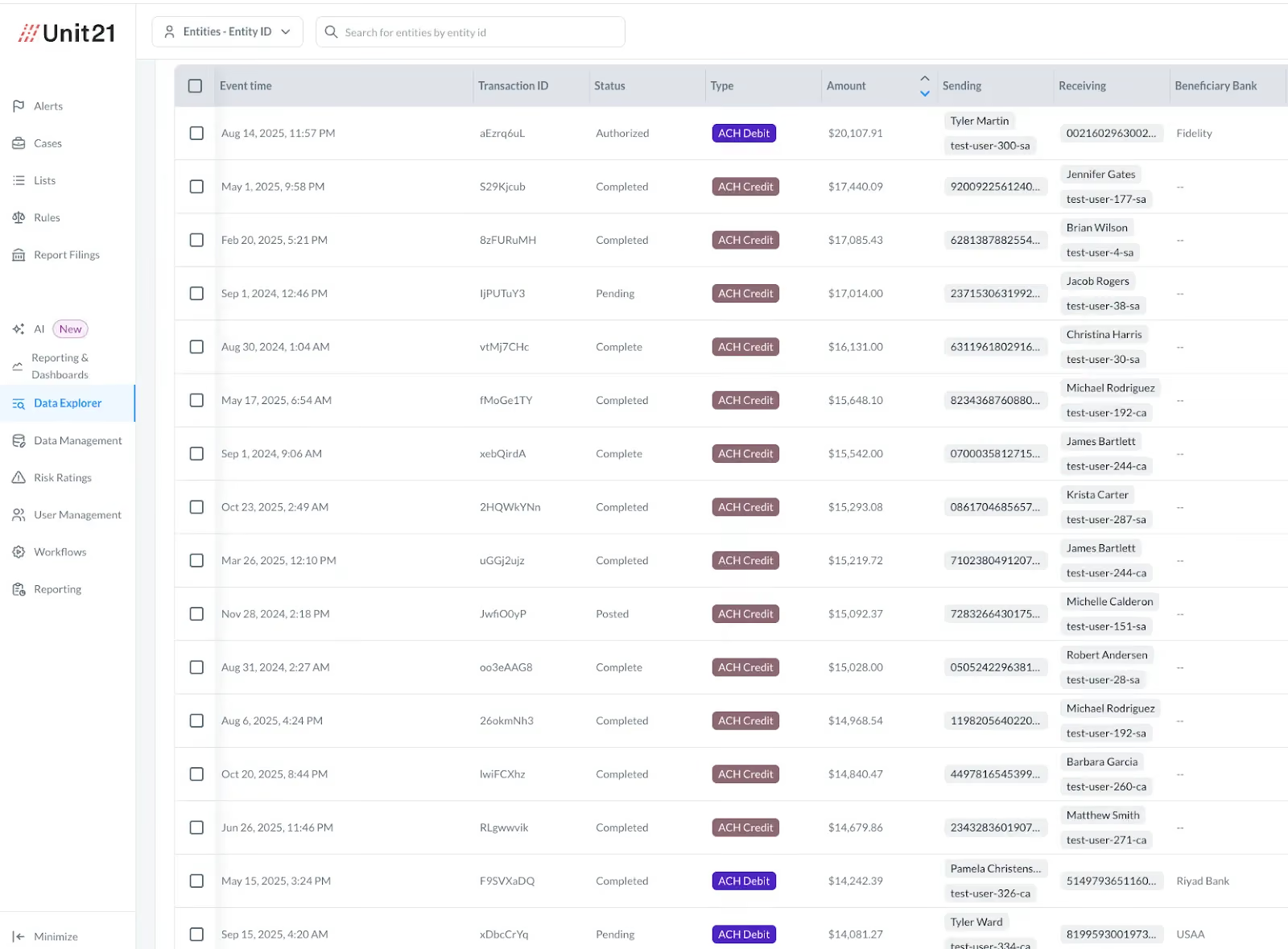
To align with ACH fraud detection expectations under the 2026 rules, institutions should expand monitoring capabilities to include behavioral and contextual logic:
Recommended Detection Strategies
- Time-aware monitoring for off-cycle or after-hours submission patterns
- Routing logic mapping to identify unusual paths or inconsistencies
- Outlier SEC code flagging for rarely used or risk-prone codes
- Behavioral baselines for users, devices, and locations
- Pre-submission session monitoring (versus post-transaction only)
Checklist for Practical Implementation
- Alerts for weekend / after-hours file submissions
- Device profiling across all submission endpoints
- Geo/time consistency checks
- Real-time exception handling workflows
- Explainable rule logic with full audit trails (explicitly required by NACHA)
These capabilities align directly with NACHA’s move toward proactive, real-time or near-real-time monitoring.
How Unit21 Fills the Gaps
The NACHA guide emphasizes that institutions must adopt risk-based, adaptive, and automated monitoring to meet 2026 expectations. Unit21 was built for exactly that.
- Device Intelligence: Real-time device fingerprinting across sessions to detect mismatches, spoofed devices, or proxy behavior.
- Network Analysis & Entity-Based Logic: Identify unusual relationships, synthetic identities, mule patterns, or routing anomalies across senders and receivers.
- Custom, No-Code Rules: Teams can deploy or modify rules instantly, including time-of-day logic, originator behavior scoring, or risk-based routing checks.
- Full Audit Trails & Automated Exception Handling: Supports NACHA’s requirement for explainable logic, escalation workflows, and complete documentation.
Unit21 enables institutions to meet NACHA’s standards while building a more resilient ACH fraud detection framework.
Get Ahead of NACHA 2026 With Unit21
Routing manipulation, unusual ACH timing, and behavioral anomalies are among the most exploited blind spots in modern ACH fraud, and NACHA’s 2026 rules place direct responsibility on every participant to detect them.
The institutions that act now will be both NACHA-compliant and significantly more fraud-resilient. Let’s explore how to plug your blind spots before the 2026 audit window – schedule your strategy session with Alex today!
Alex Faivusovich is a fraud prevention leader fighting financial fraud for the past 16 years. His career started in Israel at Leumi Card (MAX), culminating in him leading a team of 15 fraud analysts. In the U.S., Alex joined Matrix-IFS as a senior fraud consultant, providing expertise for Tier -1 banks and Fintech programs.
Alex later served as the Head of Fraud Risk at Lili Bank, leading the implementation of fraud prevention technology within the company and owning the risk policy for first—and third-party fraud. Today, Alex is Head of Fraud Risk at Unit21, guiding and advising clients along their fraud prevention journey.