
What Are False Pretenses? Key Risks for ACH Teams Ahead of 2026
The ACH landscape is about to change in a big way. With the NACHA 2026 rule updates, financial institutions will face new expectations around detecting and preventing fraud, especially fraud tied to false pretenses.
In simple terms, NACHA is making it clear that payee impersonation is no longer just a customer issue. When a criminal tricks someone into sending money by pretending to be a known vendor, employee, or authority figure, the responsibility shifts back toward the institution handling the transaction.
This blog explains what false pretenses are, why they matter, and how institutions can get ahead of NACHA’s 2026 changes.
What Are “False Pretenses” in ACH Fraud?
If you’re asking, “What are false pretenses?”, NACHA defines them as situations where a fraudster completes a transaction by misrepresenting who they are, what authority they have, or whether they own the account they’re trying to use. It’s essentially fraud by false pretenses; deception that leads to an unauthorized ACH payment.
NACHA outlines three main types:
- Identity Misrepresentation: The criminal pretends to be someone else, often a trusted partner, vendor, or employee.
- False Authority: The attacker claims they have permission to act on behalf of another person or business (for example, updating vendor bank details “on behalf of” someone).
- Fake Account Ownership: The fraudster claims they own an account that isn’t really theirs.
What this doesn’t include
False pretenses are not the same as consumer disputes or scams involving poor products or failed deliveries. NACHA 2026 focuses on deception and not on complaints about goods or services.
Real-World Examples of Payee Impersonation Fraud
Understanding common impersonation tactics helps make the risk real. Below are the types of schemes that fall under fraud by false pretenses. All of these involve identity tricks, and these are exactly the scenarios NACHA is tightening its rules around.
- Business Email Compromise (BEC): A fraudster spoofs a vendor email and sends updated payment details that look legitimate.
- Vendor Impersonation: Criminals pose as a vendor’s accounts receivable or onboarding team to get banking changes approved.
- Payroll Diversion: Attackers pretend to be employees and request last-minute updates to direct deposit information.
- Executive Impersonation: Fraudsters impersonate leaders inside a company to push emergency ACH transfers.
Why Current Controls Are Falling Short
Many institutions already have ACH controls, but impersonation fraud still slips through because these attacks target more than technology. Static rules can’t spot subtle behavior changes, and manual reviews often miss red flags when a request appears routine on the surface. Fraudsters know this, and they design their schemes to blend in.
The bigger issue is that identity checks often rely on channels like email, which attackers can easily spoof. This creates a perfect opening for requests that “look legit” but aren’t, especially during vendor updates, payroll changes, or onboarding.
Without stronger verification and behavioral monitoring, these gaps leave institutions exposed to payee impersonation and false-pretense fraud.
What NACHA 2026 Expects from Institutions
The upcoming rules put more responsibility on financial institutions to detect impersonation attempts early, not after funds have settled. Key expectations include:
- More Liability for False Pretenses Transactions: If a fraudster lies about who they are or what authority they have, it may be considered an unauthorized transaction, even if it looked valid at the time.
- Proactive Controls, Not Just Warnings: Institutions will need to show they’re actively screening for identity risks, behavioral anomalies, and suspicious change requests.
- Stronger Controls on High-Risk Events: This includes onboarding, vendor updates, payroll changes, and payment initiation, the moments when ACH fraud typically begins.
How Unit21 Helps Close the Detection Gap
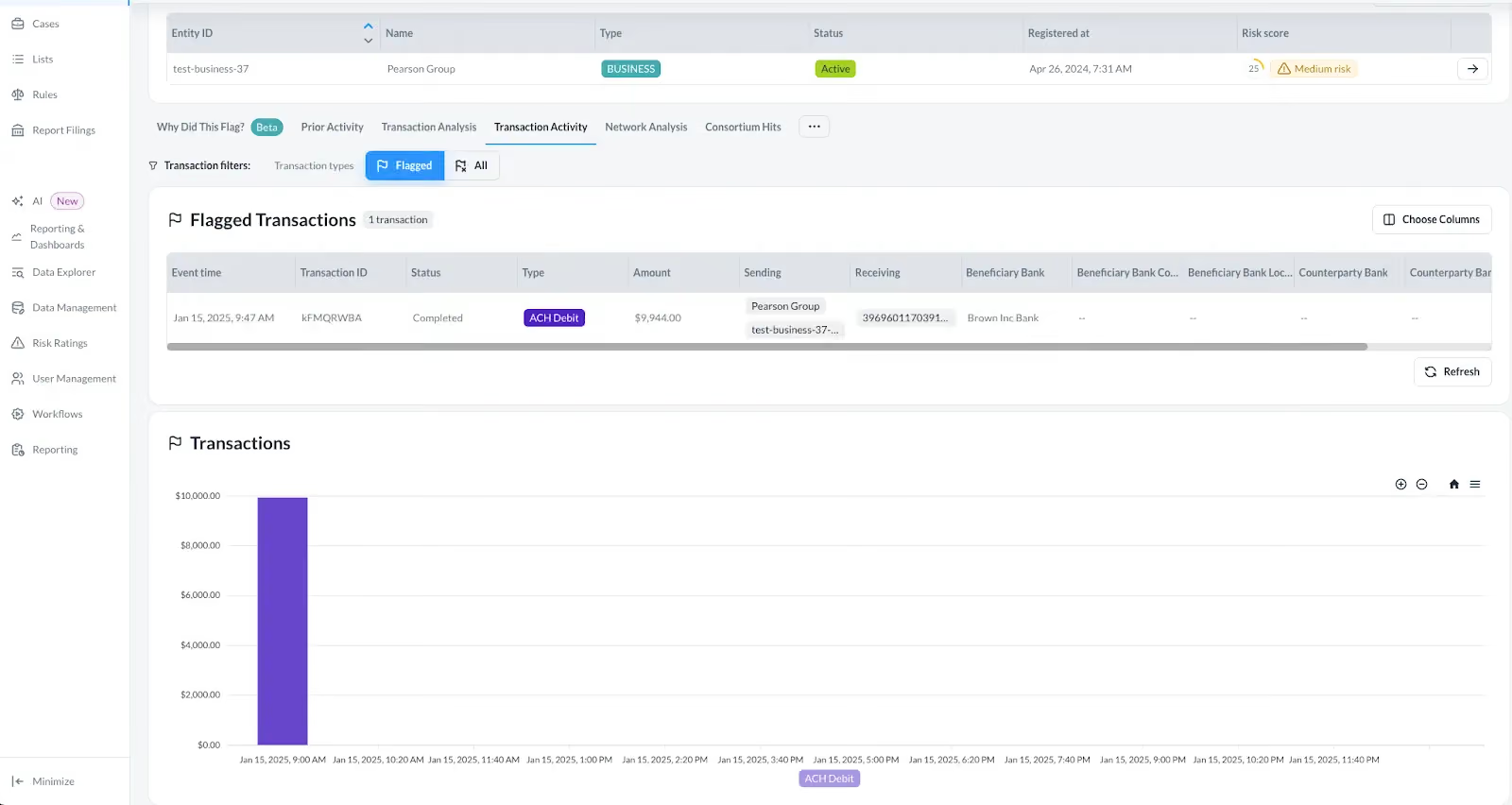
Detecting complex impersonation patterns involves many data points, and the following capabilities help teams monitor them in real time.
- No-Code Rules for Rapid Response: Teams can create and adjust fraud rules instantly without waiting for engineering.
- Real-Time Monitoring Across Sessions and Devices: Unit21 tracks behavior patterns, device fingerprints, and session changes to catch subtle impersonation attempts.
- Behavioral + Transaction Anomaly Detection: The system looks for unusual activity, suspicious update patterns, or new device risk.
- Coverage at High-Risk Touchpoints: Unit21 monitors onboarding, account changes, and ACH initiation flows in real time, helping institutions catch fraud before payments move.
Get in Front of False-Pretense Fraud Before It Escalates
False-pretense fraud is rising fast, and NACHA’s 2026 updates mean financial institutions can’t afford to wait. Now is the moment to strengthen identity checks, modernize your ACH fraud prevention workflows, and close the gaps that impersonation attackers rely on.
Let’s map your institution’s exposure to payee impersonation and false-pretense fraud. Book a strategy session with Alex today.

Alex Faivusovich is a fraud prevention leader fighting financial fraud for the past 16 years. His career started in Israel at Leumi Card (MAX), culminating in him leading a team of 15 fraud analysts. In the U.S., Alex joined Matrix-IFS as a senior fraud consultant, providing expertise for Tier -1 banks and Fintech programs.
Alex later served as the Head of Fraud Risk at Lili Bank, leading the implementation of fraud prevention technology within the company and owning the risk policy for first—and third-party fraud. Today, Alex is Head of Fraud Risk at Unit21, guiding and advising clients along their fraud prevention journey.