Request for Information in AML investigations: How to close the evidence loop
Most compliance teams handle Request for Information (RFI) the same way: write an email, wait, follow up, receive an attachment, screenshot the thread, upload it to the case, and log it in a spreadsheet. It's one of the most routine workflows in AML investigations, and almost no one has a streamlined system for it.
That works until an examiner asks what you collected before closing a case. The answer is a folder of screenshots with no clear chain of custody, timestamps you can't reconstruct, and responses that never made it into the investigation record.
That's not an audit trail. That's exposure.
Why AML RFI breaks down in practice
The problem isn't the concept. Requesting documentation from customers is a routine and necessary part of AML work: EDD questionnaires, transaction confirmations, income verification, and SAR evidence collection. Every AML team does it. Almost none have a process built for it.
Without a native workflow, the same four problems show up everywhere.
No consistency. Requests go out from personal inboxes with different templates, different timelines, and no way to standardize what gets asked or when. Two analysts handling similar cases may collect completely different evidence.
No deadline enforcement. Customers respond when they get around to it, or not at all. There's no automated follow-up, no expiration, and no visibility into what's still outstanding.
Manual evidence logging. When a response arrives, attaching it to the right investigation record is a manual step. Documents get delayed, notes go unsaved, and evidence ends up in email threads that were never designed to be a case file.
No audit trail. Examiners expect to see what was requested, when, what the customer provided, and how it informed the final disposition. A chain of forwarded emails doesn't satisfy that requirement, and it shouldn't have to.
How Unit21 solves it: native RFI in your investigation platform
RFI is now built into Unit21 as part of the investigation workflow. From any alert or case, an analyst selects a template, sets a deadline, adds a note, and sends. The customer receives a secure link to a white-labeled form with the institution's branding. They fill it in, attach documents, and submit.
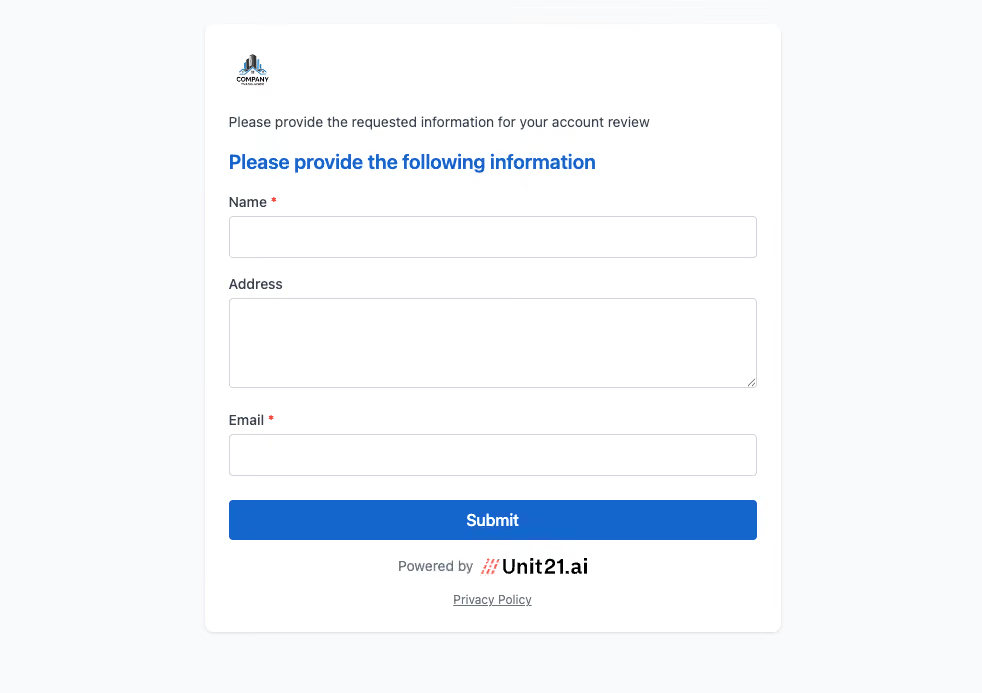
Everything flows back into the platform automatically, tied to the exact record that triggered the request. A centralized RFI summary view shows all outstanding requests across the team: pending, submitted, overdue. No screenshots. No manual uploads. No chasing.
This closes the evidence loop that AML case management workflows have historically left open. The same platform handling transaction monitoring, investigation, and SAR filing now handles the customer data collection that feeds all of that work.
What you can use RFI for
RFI handles the full range of compliance data collection: EDD questionnaires, transaction confirmations, income verification, and SAR evidence gathering. Each request follows the same consistent process, which matters both for team efficiency and for exam readiness.
When an examiner asks what you collected before closing a case, the answer is right there in the investigation, where it should have always been.
Every compliance team already does customer information requests. Now there's a system built for the job.
RFI is available now. Request a demo or if you’re a customer, dig deeper in the docs.

Gal Perelman is the Product Marketing Lead at Unit21, where she spearheads go-to-market strategies for AI-driven risk and compliance solutions. With over a decade of experience in the fintech and fraud sectors, she has led high-impact launches for products like Watchlist Screening and AI Rule Recommendations.
Previously, Gal held marketing leadership roles at Design Pickle, Sightfull, and Lusha. She holds a Master’s degree from American University and a Bachelor’s from UCLA, and is dedicated to helping banks and fintechs navigate complex regulatory landscapes through innovative technology.