Rules Orchestration: One Flow, One Decision, Full Control
Real-time fraud detection is only as good as the decisions it produces. And as rule sets grow, more event types, more risk signals, more edge cases, the challenge isn't writing rules. It's about managing what happens when multiple rules fire simultaneously and ensuring your decisioning logic remains maintainable as your fraud landscape evolves.
That's the problem Rules Orchestration is built to solve.
Introducing Flows
Rules Orchestration adds a new capability to Unit21's real-time engine: Flows.
A Flow is a prioritized, sequential chain of rules, called Nodes, that evaluates a real-time event from top to bottom and returns a single Decision: Allow, Deny, or Step-Up Authentication.
Here's how it works: when an event hits the RTR Evaluate endpoint, it enters the Flow and is checked against each Node in order. The moment it triggers a Node, it's assigned that Node's Decision and exits the Flow immediately. One event, one outcome.
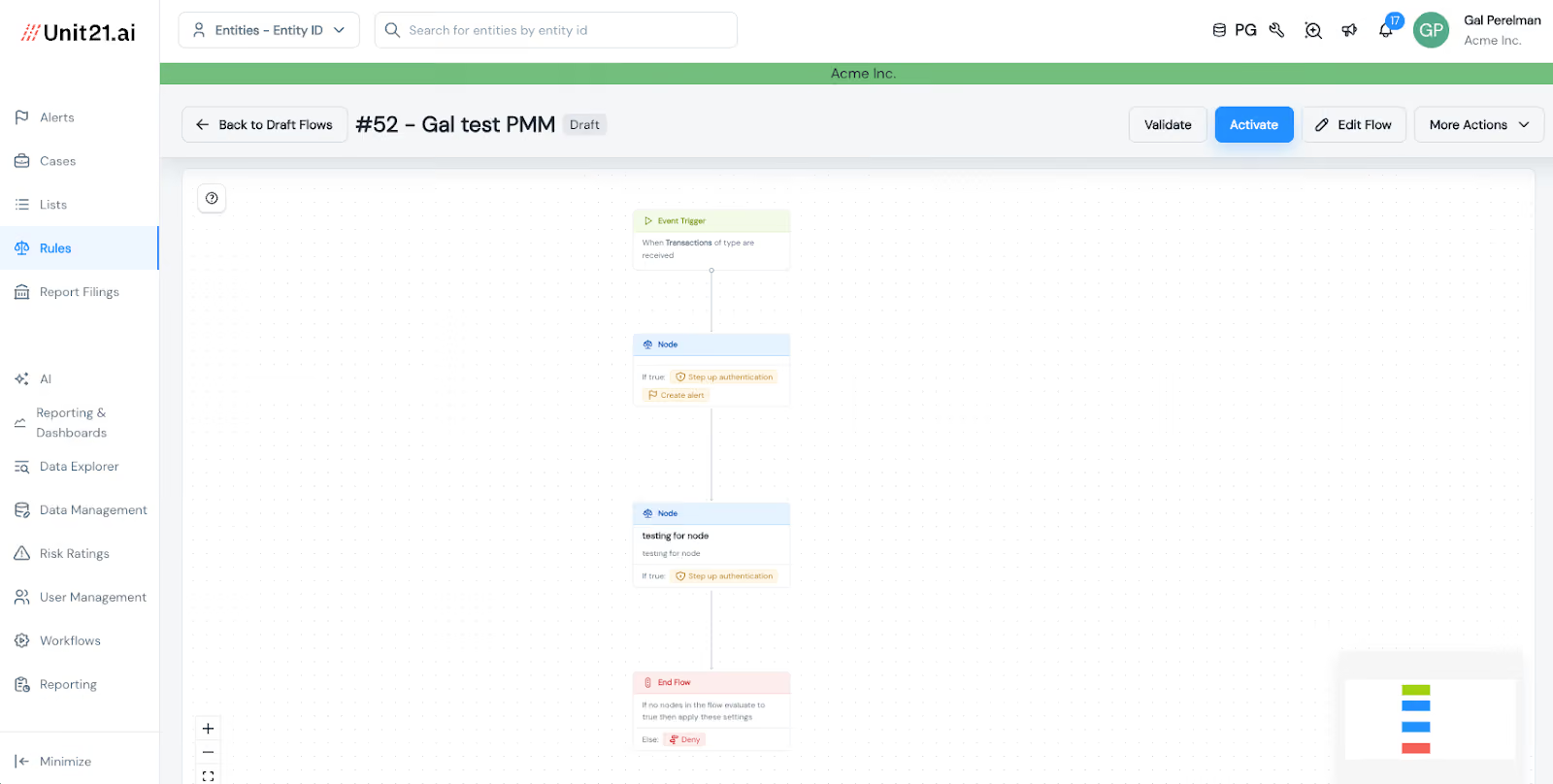
If the event doesn't trigger any Node, it falls to the Default Node at the bottom: a configurable catch-all that ensures every event receives a decision, even if it doesn't match any specific rule above it.
This structure changes the way you think about rule design. Instead of asking "what signals does this rule catch?", you're asking "what should happen to this event?" Trusted signals at the top. High-risk blocks below that. Gray-area friction further down. The Default Node handles everything else.
What Flows Make Possible
Allow as a first-class decision. Flows support Allow, Deny, and Step-Up, meaning you can build rules around trusted signals, not just risky ones. A recognized device, a returning customer with a clean history, and a low-risk transaction profile can all trigger an Allow and exit the Flow immediately, without running through every risk check in your stack.

Decisioning logic that lives in the platform. When you build a Flow, the priority order lives inside Unit21. Change your fraud strategy? Update the Flow. No downstream code to touch, no engineering ticket to file.
Validate before you go live. Flows include a Validation Mode that runs your Flow against historical event data before activation. You can see exactly how real past traffic would have been decisioned, which events would have been allowed, denied, or stepped up, and tune accordingly. When you're confident, activate.

What Stays the Same
Rules Orchestration is additive. Your existing Real-Time Rules continue to work exactly as they do today: evaluated independently, returning their own outcomes. Standalone rules aren't going away.
Flows are a new option for teams that want to centralize and prioritize their decisioning logic inside the platform. You can run both: standalone rules for some event types, and Flows for others.
Getting Started
Rules Orchestration is enabled for all Real-Time Rules customers. Head to the Flows tab in your Unit21 dashboard, or check out the documentation here to start building.

Gal Perelman is the Product Marketing Lead at Unit21, where she spearheads go-to-market strategies for AI-driven risk and compliance solutions. With over a decade of experience in the fintech and fraud sectors, she has led high-impact launches for products like Watchlist Screening and AI Rule Recommendations.
Previously, Gal held marketing leadership roles at Design Pickle, Sightfull, and Lusha. She holds a Master’s degree from American University and a Bachelor’s from UCLA, and is dedicated to helping banks and fintechs navigate complex regulatory landscapes through innovative technology.