
AI task spotlight | Edition no. 01: Structuring activity analysis

Every two weeks, we spotlight an AI task from Unit21's task library, something many compliance and fraud teams are configuring and running inside their workflows today.
We're starting with structuring, because it's one of the clearest examples of a problem that's completely solved by automation, but rarely is.
What Structuring Is (and Why It's Hard to Catch)
Structuring, sometimes called smurfing, is the practice of deliberately breaking up transactions to stay below CTR reporting thresholds. Under 31 U.S.C. § 5324, it's a federal crime regardless of whether the underlying funds are from illicit sources. The intent to evade reporting is the violation.
The detection challenge isn't conceptual. It's operational. Structuring patterns don't announce themselves; they emerge across rolling windows of transactions that individually look unremarkable. Identifying them requires pulling transaction history, calculating aggregate amounts, assessing timing and frequency, and evaluating whether the pattern of amounts appears deliberate rather than coincidental. Then, do that again for the next alert. And the next.
That's the bottleneck. Not the analysis itself, but the fact that it has to be done manually, from scratch, case after case.
Introducing Unit21’s AI task: Structuring activity analysis
Structuring activity analysis: What it does
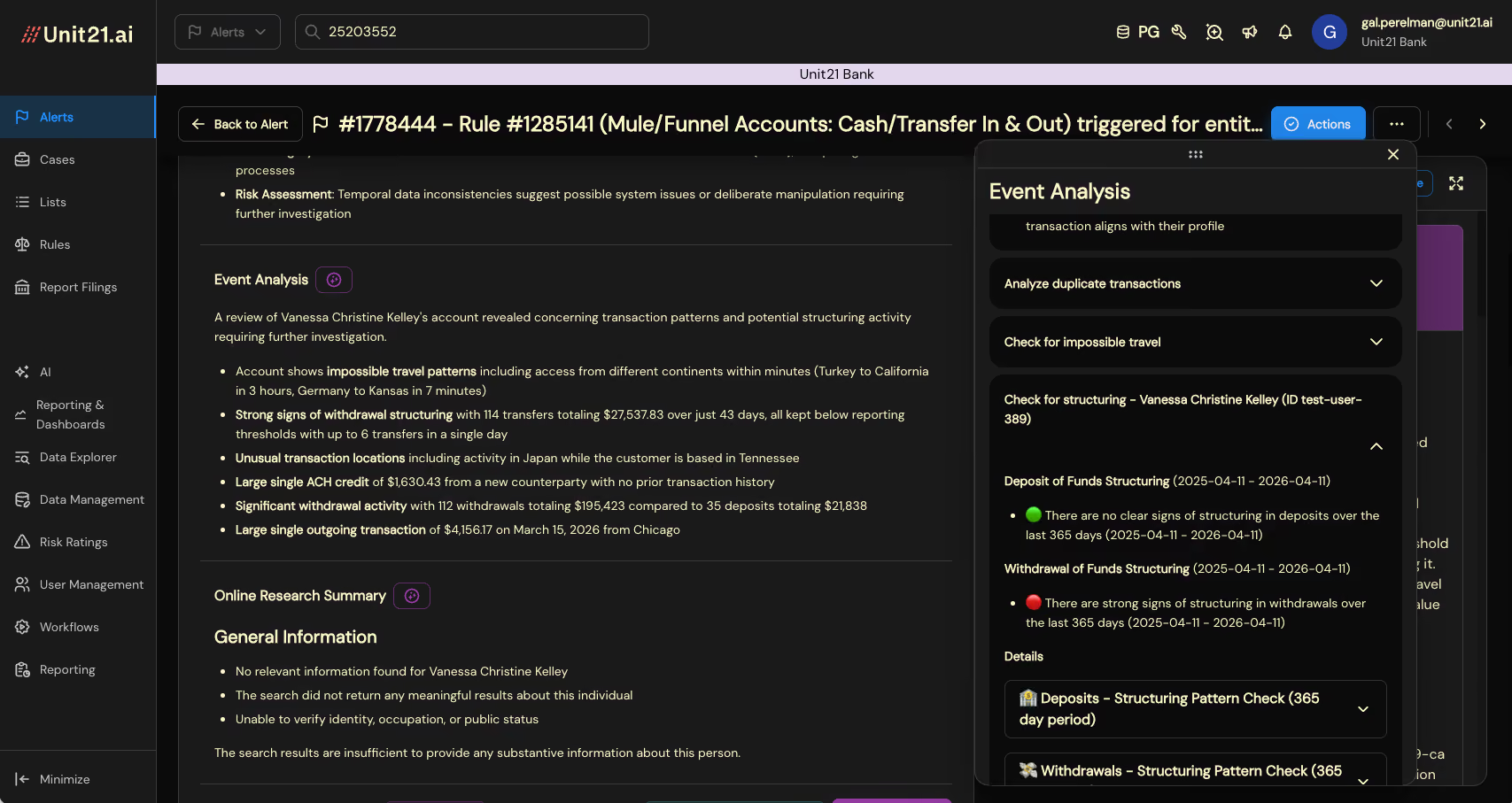
Structuring activity analysis examines transaction patterns to detect potential structuring behavior, in which large amounts are split into smaller transactions to avoid reporting thresholds. It surfaces the signals analysts need, structured and ready to act on.
The agent automatically reviews:
- Transaction amounts relative to reporting thresholds (e.g., sub-$10,000 patterns)
- Timing and frequency of transactions across a rolling window
- Whether transaction sizes appear deliberately calibrated to stay below CTR requirements
- Counterparty patterns and account-level transaction history for corroborating signals
Structuring activity analysis: What the agent outputs
- A structured narrative assessing whether structuring indicators are present, written, and ready for SAR documentation
- A clear risk signal, present, absent, or inconclusive, ready to feed into your case workflow
- Supporting evidence drawn from transaction history, formatted to support SAR documentation
Structuring activity analysis: Why this matters
Structuring is one of the most common SAR typologies. Examiners expect financial institutions to have systematic controls in place to detect it, and increasingly, they expect those controls to produce documentation that holds up under scrutiny.
The gap most programs run into isn't detection. It's documentation. Even when an alert fires correctly, an analyst still has to build the evidentiary record: pull the window, map the pattern, assess intentionality, and draft the narrative. For a typology that accounts for a significant portion of a program's SAR volume, that adds up fast.
Structuring Activity Analysis closes that gap. It doesn't flag a potential issue and hand it to an analyst to investigate; it conducts the investigation and then presents the output ready for review. The analyst's job is to evaluate the findings and make the call, not to assemble the case.
Because it's built on Unit21's Build Your Own Task framework, it can be configured to your thresholds, your rolling window, and your SAR narrative format. It runs in your existing workflow. Nothing new to learn.
About this series
The AI Task Spotlight runs every two weeks. Each edition covers one task from Unit21's library: what it does, how it works, and who it's for. If a task is solving a real problem for one team, it can probably solve the same problem for yours.
Gal Perelman is the Product Marketing Lead at Unit21, where she spearheads go-to-market strategies for AI-driven risk and compliance solutions. With over a decade of experience in the fintech and fraud sectors, she has led high-impact launches for products like Watchlist Screening and AI Rule Recommendations.
Previously, Gal held marketing leadership roles at Design Pickle, Sightfull, and Lusha. She holds a Master’s degree from American University and a Bachelor’s from UCLA, and is dedicated to helping banks and fintechs navigate complex regulatory landscapes through innovative technology.